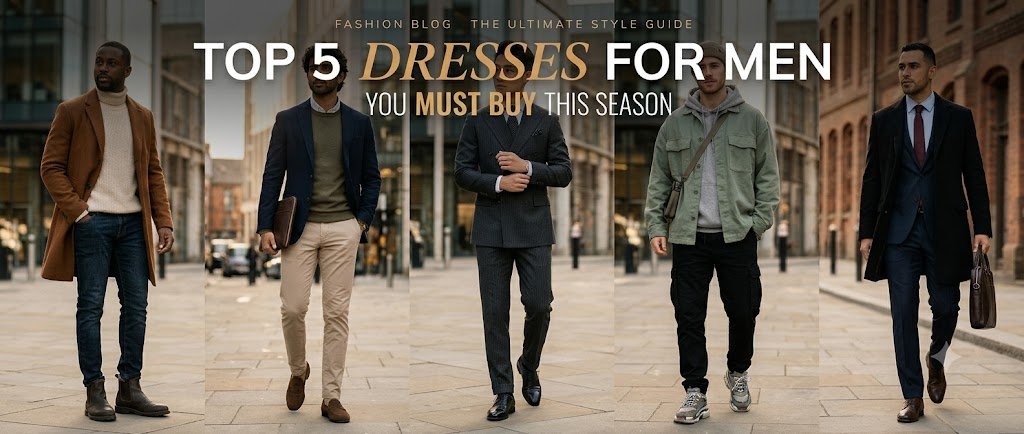
Before you buy anything for a new season, stop scrolling trend pages for a minute and look at your actual week. What do you wear to work, to the market, to your cousin's wedding? What is the weather doing where you live, what fit do you keep reaching for, and what is already in the cupboard? The five menswear picks below handle different occasions; bend them to your comfort and your budget. "Must buy" does not mean one uniform for everyone — it means the pieces you will genuinely wear.
1. Lightweight overshirt or casual layer
An overshirt sits over a tee or a plain shirt as an extra layer, and that is exactly what makes it useful: mild weather, long travel days, air-conditioned rooms where the temperature swings. You can take it off in seconds. Cotton twill, denim and other medium-weight fabrics all work; pick on feel, the care label and what your local weather is actually doing. A heavy lining makes little sense in a hot city, while in a cold season the layering is the whole point.
Navy, olive, charcoal and beige pair easily with tees and trousers you already own. Check the shoulder seam and the sleeve length, then move around in it over the tee you would really wear underneath. Too tight and layering becomes a wrestling match; too loose and the proportions turn bulky in a way that is hard to fix.
2. One good casual button-down shirt
A plain or subtly checked button-down covers casual plans, family gatherings and the softer end of smart-casual. Choose the fabric by season and by how much you are willing to look after it. If you want something breathable, cotton or a cotton blend is a sensible start; for travel, compare how much each one creases and whether it needs ironing. The composition and washing instructions on the label are worth thirty seconds of your time.
Wear it with jeans for a relaxed look, with chinos to sharpen it slightly, or open over a tee as a light layer. The collar should sit comfortably around your neck without pulling when you button it. If you plan to tuck it in, check the length and the hem shape first. Keep the pattern subtle for a first shirt — it is far easier to match with the trousers and shoes you already have.
3. Polo or clean everyday tee
A polo reads a touch more structured than a tee, while a plain crew-neck is the simplest daily option there is. Either way, look at the fabric weight, the neckline, the sleeve and the body length. Pick the neckline you are comfortable in. Forcing a fit because some rule says so usually ends with the shirt sitting unworn at the back of the drawer.
One or two solid colours rotated across jeans, chinos and shorts will do more work than five statement pieces. If you like logos or graphics, look closely at the size and the print quality; a bold print on top of an already patterned bottom tends to look crowded. Lighter colours feel better in heat, but check the transparency and the care instructions before you commit.
4. Straight-fit jeans or versatile chinos
Your lower half is the base everything else sits on. Straight or relaxed-straight jeans handle casual wear well; chinos give you a neater option. Think about your work, your commute and how much you move before you choose fabric and fit. The waistband should be comfortable whether you are standing, walking or sitting, and the shape should not strain when your pockets are full.
Dark indigo, black, navy, khaki and charcoal are the easiest to pair with whatever tops you own. Look in the mirror from the front and the side to see where the hem falls over your shoes. Model heights and sizes in listings are no substitute for your own measurements — compare the size chart against the garment measurements. For general styling and fit basics, the women’s wardrobe picks are worth a read too.
5. Weather-appropriate jacket or sweatshirt
One outer layer matched to the season is usually enough. A light jacket for cold or windy days, a sweatshirt for over-cooled indoor spaces. Look at your local temperature, how much rain you will meet and what your commute involves; a heavy winter coat is not the answer everywhere. Inspect the fabric, the zipper, the pockets and the care instructions. If you need rain protection, check what the description actually means by water resistance instead of assuming the word "weatherproof" covers every condition.
Try it on over the shirt or tee you would wear underneath it. Raise your arms, close the zip, sit down. Neutral outerwear works with more outfits, which is usually why it gets worn more. If you also want a layer that passes at the office, there are cleaner silhouettes in the men’s office-wear ideas.
How to match an outfit to the season and your routine
Pick a base outfit — tee or shirt, lower wear, shoes — then add a layer according to the weather. Keeping the palette to two or three complementary shades helps when you are starting out. If the occasion has a dress code, that wins over everything else; a family function, a campus day, a casual office and a weekend outing all ask for different things. Keep accessories simple, and do not trade away comfort for them.
Hypothetical example: you are packing for a weekend trip. One neutral tee, dark jeans, a casual button-down and a lightweight overshirt give you several different combinations. Add a sweatshirt if the weather turns cold. This is only an outfit-planning example — it is not a claim about any brand, product quality or universal weather suitability.
Shopping checklist
- I have thought about when and where I would actually wear this, given my routine and the season.
- I have compared the size chart with my own measurements and the fit I like.
- I have tested comfort sitting, walking and moving my arms.
- Fabric label, washing instructions and transparency checked.
- I can picture it with at least two pieces I already own.
- Price, alterations, care and how often I will wear it are all accounted for in the budget.
Common mistakes
- Buying for the trend: if it does not fit your routine, it will not get worn.
- Guessing the size: brand sizing varies, so read the garment chart.
- Ignoring the weather: a heavy or lined piece can be uncomfortable in your local climate.
- Skipping the care label: delicate washing or constant ironing makes an item a chore to keep.
- Not matching the wardrobe: picture your existing tops, bottoms and shoes before you pay.
FAQs
Do I need a new wardrobe every season?
No. Layers and fresh combinations can stretch the basics you already own. Do a wardrobe audit first.
How should I choose the size of a casual shirt?
Compare the shoulder, chest, sleeve and length on the chart. Then test movement in the fit you actually like.
Should I only buy neutral colours?
No. Neutral pieces are easier to combine, but if you like colour or print, plan it around the clothes you already have.
What should I check when buying clothes online?
Measurements, fabric composition, care details, return terms, real product photos and which variants are actually in stock.
Conclusion
Let your routine, the weather and your comfort guide seasonal shopping. Choose the versatile pieces first, then add colour or trend. Treat this list as a starting point rather than a shopping order — you do not need every item on it. Adapt the office styling and the combinations to the schedule you actually keep.