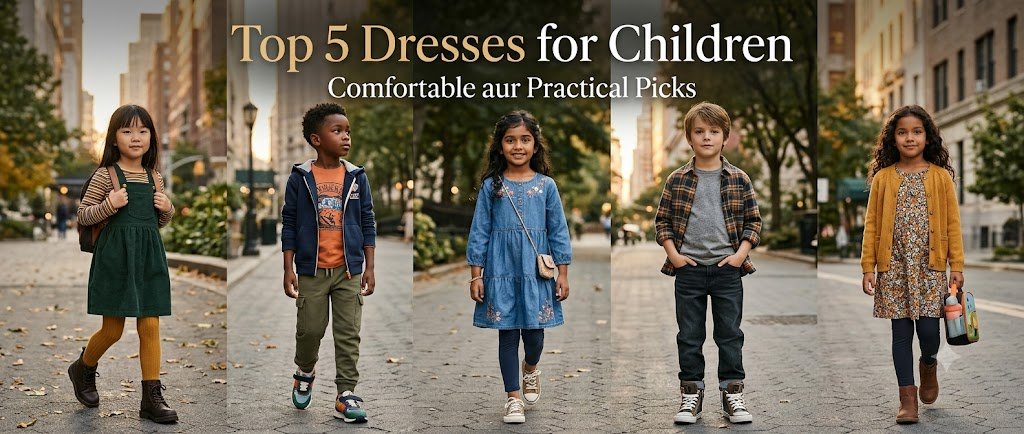
The right outfit for a child is the one that survives their day — the running, the sitting on the floor, the weather outside, whatever the family is actually doing. Softness matters, but so do the seams, the closures, the care label and whether the kid can move in it. Every child's sensory preferences are different, which is exactly why an age label on its own tells you very little. The five outfit types below cover everyday use through to special occasions — they are ideas, not brand or product recommendations.
1. Everyday top-and-bottom set
A tee or top with shorts, leggings, joggers or trousers is the workhorse of a child's wardrobe. The pieces can be reused in different outfits, and when the laundry piles up there is a spare item to fall back on. Choose the fabric by how it feels on skin and by the local climate; read the composition and the wash instructions on the tag. A "cotton" or "soft" claim on the label is no substitute for putting it on the child and watching how they react.
Check the neck opening, the waistband and the seams. An elastic that grips too hard, or a rough tag, can irritate all day. Let the child sit, walk, lift their arms and play on the floor — the fabric should not block any of it. Read the product safety information on drawstrings, detachable decorations and small parts carefully, especially for younger children.
2. Playwear that lets them move
Playwear should be about easy movement and easy laundering. Go for stretch-friendly lower wear, a comfortable top and a season-appropriate layer. Look at how the knees, the cuffs and the closures are made, because active play puts more strain on those areas than anything else in the wardrobe. If play happens outdoors, the family decides what sun or rain protection, or extra layer, the weather and the activity call for.
Play clothes do not need to become "special" outfits. You can pick colours and patterns where stains and frequent washing feel manageable to you, but the care label still needs following. Footwear and clothing should both suit the activity; inspect the garment for loose hems or trailing ties before you buy it.
3. Easy-care outfit for school or an outing
For school, a day trip or a family outing, a child needs clothes that are comfortable and manageable during bathroom breaks and coat changes. An elastic waist, a front opening or familiar fasteners can help, depending on the child's age and ability. If there is a school uniform rule, confirm the colour, the logo and the permitted style first — do not guess at uniform requirements.
Whether you carry an extra layer or a spare top on an outing depends on your family routine. Check that the labels are not scratchy, that the pockets are secure, and how much help the child needs to dress themselves. Trying a new outfit before the event or the first day of school catches fit and closure problems while you still have time to swap it.
4. Kurta set, frock or neat outfit for an occasion
For a family function or a celebration, a kurta-pyjama, frock, dress, shirt-trouser or a cultural outfit all work. Ask the child what they prefer, and keep the length of the event, the weather, how much sitting there will be and how much moving around in mind. Stiff fabric, heavy embellishment or a fiddly closure can make a child miserable. Wearing it briefly at home first is the easiest way to test fit and comfort.
Understand the care needs too: hand washing, dry cleaning or delicate ironing either fits your normal routine or it does not. If accessories are detachable, they need supervision and age-appropriate safety. "Special event" should not mean "uncomfortable" — an occasion-ready look can be simple and child-friendly at the same time.
5. Layerable outerwear for the weather
A light jacket, cardigan, hoodie or rain layer makes sense depending on where you live and the season. No single type suits every weather; go by the garment label, the local conditions and what the child will be doing. Put the layer on over the top and check arm and shoulder movement. Inspect the zipper guard, the hood fit, the pockets and how the cuffs feel.
Whether a layer lives in the bag or stays on depends on the child's routine. A name label helps for school or travel, but a child's personal details should not be publicly visible. The clothes underneath should be comfortable and right for the weather too. To connect your shopping to the wider family wardrobe, the seasonal menswear ideas and the women’s wardrobe picks are worth a look.
A simple test for size, comfort and care
An age-based size guide is a starting point, not a guarantee. Compare current height with the garment measurements and follow the brand's chart. Buying two sizes up to "grow into" can create problems at the cuffs, the hem or the shoulders. An outfit that is too tight affects how a child moves and how they feel. If the fit is doubtful, read the store's return and exchange terms before paying.
Pay attention to washing instructions, colour bleed, shrinkage information and drying method. If an inside label irritates the child, check the product's care guidance and follow safe removal instructions. Do not assume anything about strong detergent, fabric treatments or allergy claims; if the child has a known sensitivity, the caregiver should choose the material according to the guidance they trust.
Hypothetical example: a school trip involves both outdoor play and a bus journey. The caregiver checks the weather, then packs a comfortable top-and-bottom set, an easy layer and spare clothes. That is a planning example only — every child's needs are different.
Shopping checklist
- The clothes look right for the child's activity and the local weather.
- The fit is comfortable when the child sits, walks, plays and lifts their arms.
- Elastic, seams, labels, buttons and closures all checked.
- Age-appropriate product safety details, and small or detachable parts, reviewed.
- Care instructions are manageable within the family's laundry routine.
- Uniform or dress-code requirements verified where they apply.
- Return terms and room to grow planned for, without buying an oversized fit.
Common mistakes
- Treating the age label as an exact size: check the measurements and test the real comfort.
- Not trying an occasion outfit at home: check the closures, the length and how it feels when sitting.
- Ignoring the care label: think about whether the special washing is practical for your family.
- Choosing only by adult preference: include the child's comfort and an age-appropriate choice.
- Missing loose ties or detachable details: read the garment construction and the product warnings.
FAQs
How much bigger should I buy kids' clothes?
Check the brand size chart and the garment measurements. An excessively loose outfit can cause problems with movement and around the hem.
Which fabric is best for children's clothing?
There is no single best fabric. Compare the climate, the activity, the child's skin preference, how the garment is made and the care instructions.
Should a special occasion outfit be tried on first?
Yes. It lets you check the fit, the closures, the movement and the comfort before the event.
Is writing a name on clothes safe?
Depending on school policy and family preference, limited identification on an inside label works; keep personal details away from public view.
Conclusion
With children's outfits, look at comfort, safe fit, activity and easy care together. You do not need one piece from every category — pick what is useful for your child and your routine. Plan the family wardrobe around the season, the activity and each person's comfort.